Service area
Mobile RV repair in Tecopa, CA
Tecopa is over the state line in California, it is built around hot springs, and it fills every winter with people who park a rig and stay for months rather than nights. That makes the RV work here almost entirely a different job from the rest of this site. Call to get connected with a licensed local RV technician.
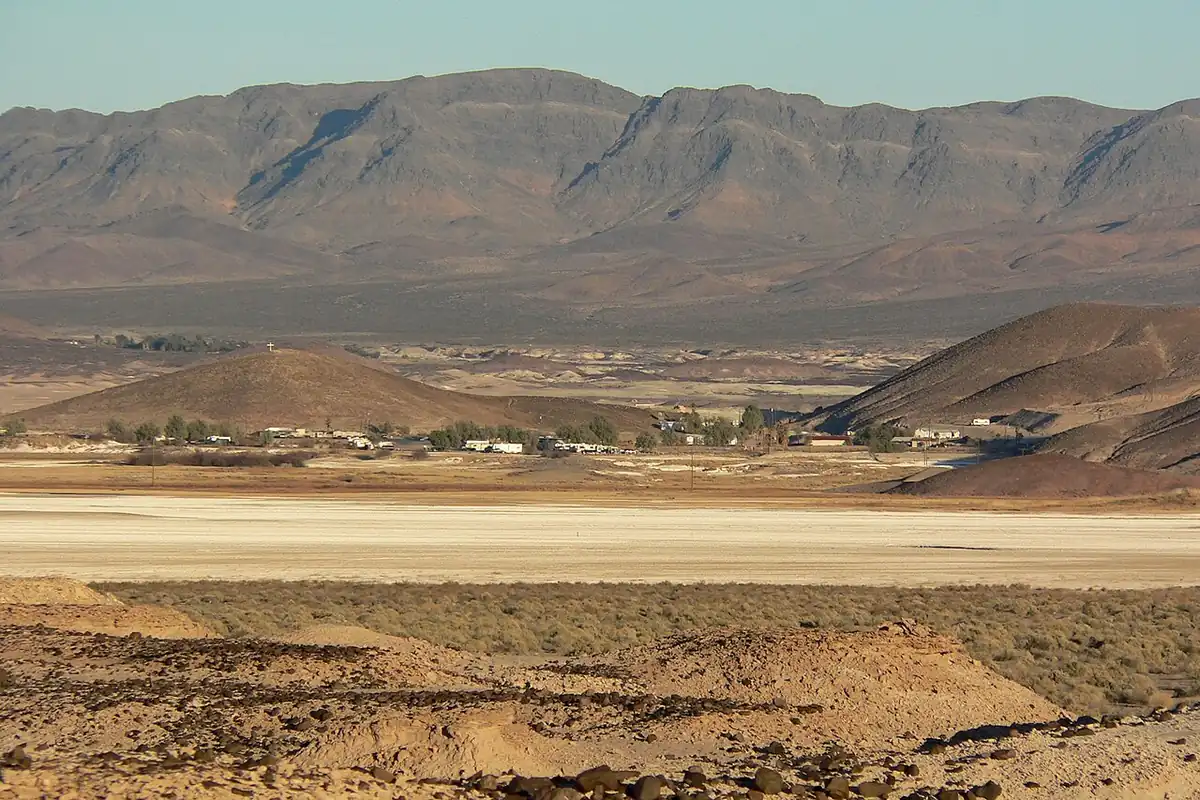
Nobody here is in a hurry
Most pages on this site are about emergencies. Somebody stopped on a highway, somebody stuck in a park, somebody whose AC died on the hottest day of the year. Tecopa is the opposite, and the difference is worth understanding because it should change how you use a technician.
The winter scene here is long-stay. People arrive in the cool months, settle in near the springs, and stay put. Some of them come back to the same spot every year. It is a genuinely distinct culture from Pahrump: quieter, more spread out, more boondocking and less full hookup, and a lot more people who have been doing this for years and know their rigs.
That means the calls are maintenance calls, not rescues. And maintenance calls, unlike rescues, can be planned. Which is exactly the leverage you have out here and most people do not use.
Use the drive properly
Tecopa is a real drive from Pahrump, which is where the technicians we refer are based. It is a different state, which sounds more dramatic than it is on the ground, but the mileage is genuine.
The pricing structure is the same everywhere: a trip fee of $75 to $150 gets a truck to your rig and typically covers something like the first 30 miles, with a per-mile charge past that. Labor is $125 to $175 per hour with a one hour minimum. See the cost page for the whole picture.
Here is the part that matters. You are paying for that drive whether the tech is there for ten minutes or four hours. So do not call for one thing. If somebody is coming over, have a list ready: the roof, the fridge, the water heater, the awning, the batteries, the step, the thing you have been meaning to ask about since last season. The marginal cost of the second and third job is just labor, and the drive is already spent.
Better still, coordinate. If several rigs in the same area need work, a tech making one drive to serve several customers is a much easier call to get scheduled, and everybody's day works out better. That is a normal conversation to have on the phone and it is worth having.
Parked for the season with a list? That is exactly the right call to make.
Winter is the window, so use it
There is a second reason the seasonal thing matters, and it is physical rather than commercial.
Roof work is the best example. A reseal is routine maintenance and it is cheap next to what it prevents. It is also three hours on top of an aluminium-skinned box in full sun. In winter that is a pleasant enough job that gets done properly in one go. In July it is a heat exposure risk to a human being, it happens in short shifts, and it costs more because it takes longer.
So the winter you are already spending here is the correct time to do everything the desert has been quietly ruining. In this climate UV cooks lap sealant around every vent and skylight until it cracks, chalks the membrane, and turns slide seals and awning fabric brittle. None of that announces itself. The roof fails silently, water gets in, and you find out about it a year later when a wall feels soft. By then you are not paying for sealant, you are paying for damage. The roof page covers what an inspection actually checks.
Slide seals are where this gets expensive, and it is worth being specific. Caught early, a brittle seal or a mechanism out of adjustment is a service call and an hour or two of labor. Genuinely minor. Caught after water has been getting into a laminated RV floor for a couple of seasons, it is the most expensive repair on the entire coach, because you are no longer buying a seal, you are buying structural work on a vehicle whose structure was stapled together at a factory. There is no honest range between those two numbers. They are two different jobs that happen to start with the same symptom.
What long-stay boondocking actually breaks
A rig parked for months without full hookups develops its own failure list, and it is not the list a weekend camper has.
Batteries and charging. The system that gets the hardest use and the least thought. Months of daily cycling finds every weak cell, every bad connection, and every solar controller that was never set up right for the bank it is charging.
Water and waste. Daily use for a whole season is a different duty cycle than a few weekends. Pumps, valves, and water heaters get found out.
The fridge. Running continuously for months, and absorption fridges are fussy about level, ventilation, and heat. Worth a proper diagnosis rather than a replacement, since a genuine cooling unit or electrical failure runs $800 to $2,100 and a lot of fridge complaints are neither.
The generator. If you are off grid it is not an accessory, it is infrastructure. It also only fails when you actually need it, which is the entire personality of the thing. See the generator page.
And the scope, so you do not waste a trip fee: the technicians we refer handle the house. Appliances, HVAC, roof, slides, awnings, generators, solar, electrical, water and waste, leveling, hitches, brakes and bearings. Not the engine, transmission, or chassis of a motorhome, which is a truck shop. Not collision, and not towing.
Nearby
The technicians we refer come over from Pahrump, where most of the region's rigs and all of the short calls are, and they work west into Death Valley. If you are heading into the park after your stay here, that page is worth reading first.
Get connected with a licensed local RV technician.